The Temple
The two banks of the Nile near modern Luxor comprise ancient Thebes, Thebes of a Hundred Gates, as Homer called it (Iliad IX.381), or Uaset as it was known to the Egyptians, the capital of the Fourth Nome of Upper Egypt and, from the New Kingdom onwards, first the political and then the religious centre of the entire country.
The archaeological site of Thebes is extraordinarily rich, with a complex of sacred and secular buildings: temples, tombs, palaces, and residences. On the right bank are the temples dedicated to the god Amun, around which the ancient city developed: those of Karnak and Luxor, connected by a long avenue of sphinxes.
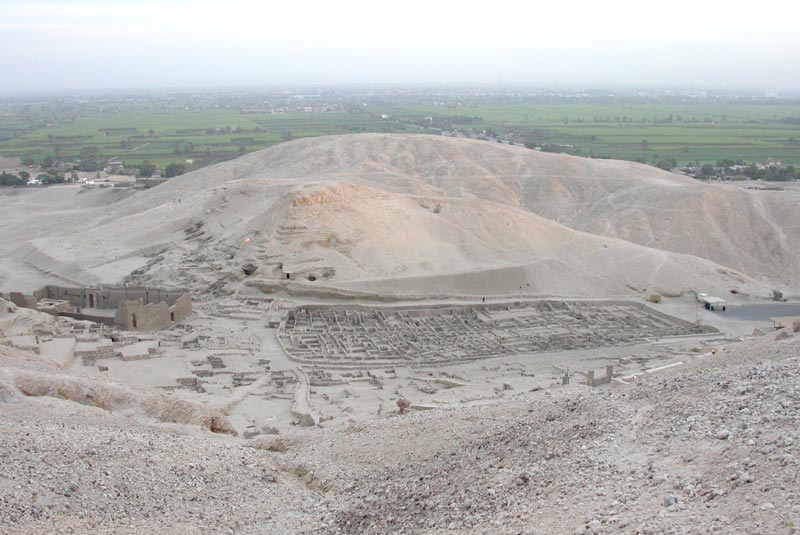
All the rulers buried in the Valley of the Kings also had a temple on the border between the Valley and the western mountain. These buildings, called the Temples of Millions of Years and each named after its founding pharaoh, were primarily temples of Amun, in which the god also assumed the personality of the ruler. The structure generally mirrors the traditional Egyptian temple, consisting of a pylon, a courtyard, a hypostyle hall, and a shrine. There was no actual place for offerings to the deceased ruler, but there were structures dedicated to his earthly predecessor (on the left) and to the god Ra (on the right). The king, linked to his predecessor and his divine father, thus secured his kingship.
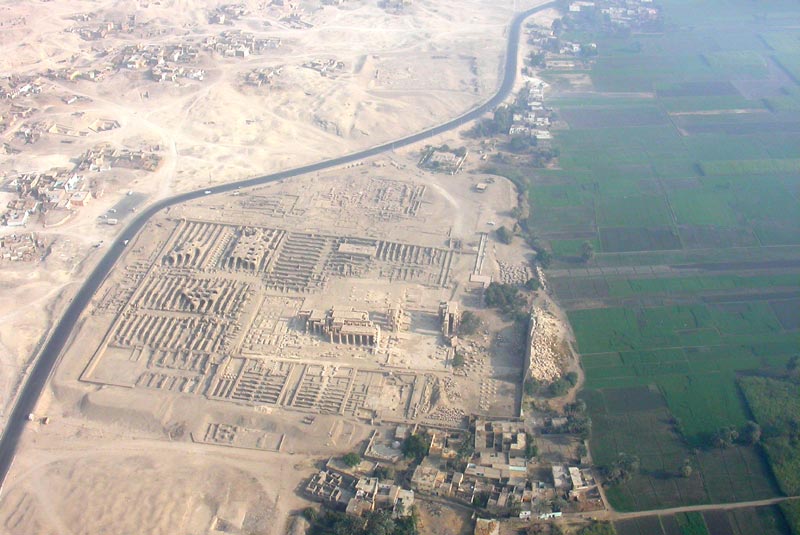
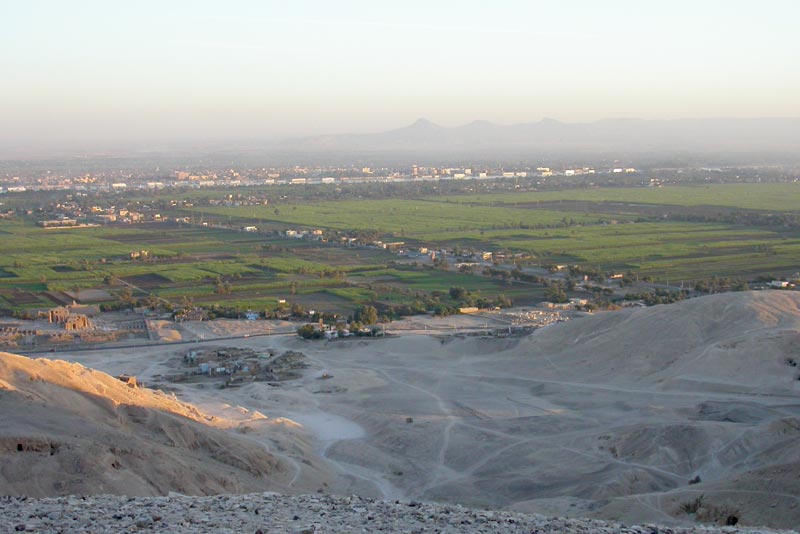
the left bank are the necropolises of the kings and queens of the New Kingdom – the Valley of the Kings and the Valley of the Queens – along with the village of the workers who built them, the tombs of prominent individuals, and a series of temples aligned from east to west along the border between the cultivated fields and the desert area, dedicated to the cults of the rulers together with the god Amun. Pharaoh Amenhotep III chose this bank to build his palace at Malqata, while, after the end of the New Kingdom, an important centre was established at Medinet Habu, in the area of the temple of Ramesses III.
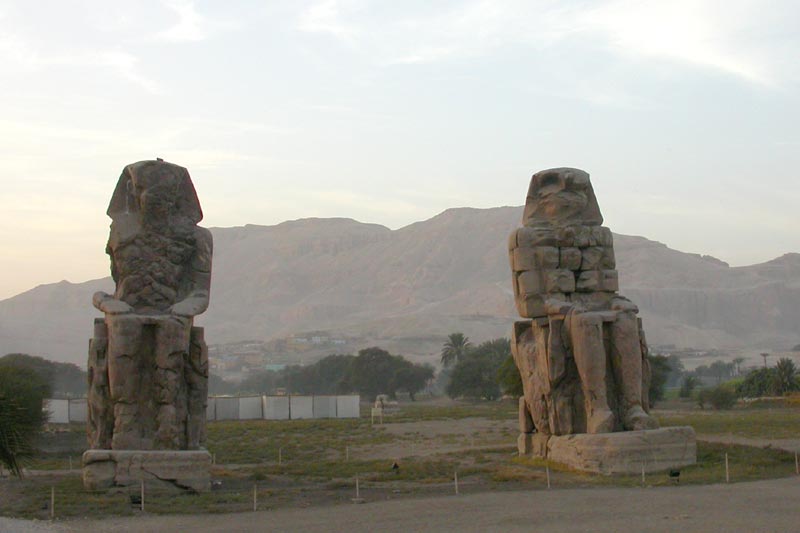
In the area of Sheikh Abd el-Qurna, Ramesses II built the most colossal temple among those known and preserved, surrounded by a 260 m by 170 m enclosure wall, known as the Ramesseum. The heart of the temple is surrounded by numerous religious buildings, as well as secular ones, such as storerooms and kitchens. Ramesses II built his temple on an area occupied by an earlier necropolis and positioned between the temples of two 18th Dynasty rulers, father and son: Amenhotep II to the north and Thutmose IV to the south.
The temple of Amenhotep II was summarily excavated, along with other temple structures, by Sir William Matthew Flinders Petrie, who published the results of his investigation in “Six Temples at Thebes” in 1896.