
AMENHOTEP II
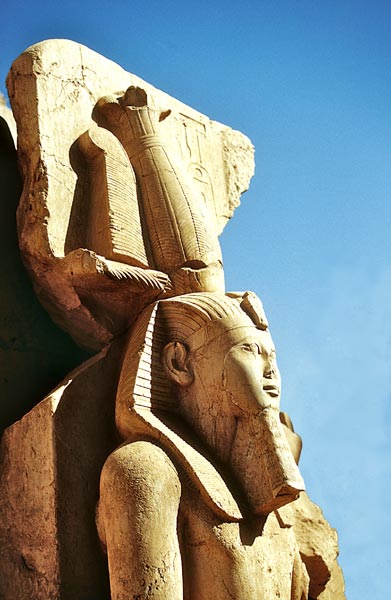
Horus: Mighty, sharp-horned bull
Nebty: Rich in power, crowned at Thebes
Golden Horus: Who has conquered all the lands with his might
Aakheperura
Amenhotep
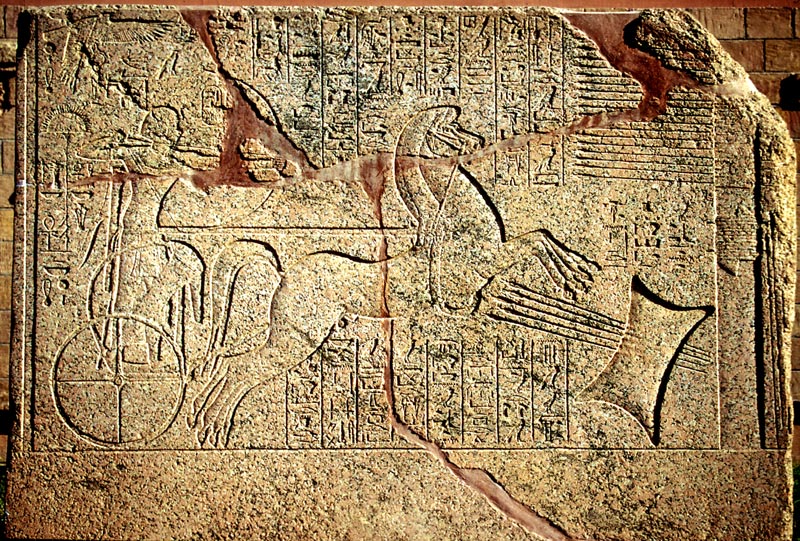
Son of Thutmose III and the Great Royal Wife Hatshepsut-Meritra, he most likely became coregent with his father at the age of eighteen and after about two years became pharaoh with the name Aakheperura Amenhotep. From the beginning of his reign, he found himself having to undertake several military campaigns in Syria to consolidate his father’s conquests: the first in year 3, against Takhsy, followed by two more against Mitanni in years 7 and 9, commemorated, inter alia, by the stelae of Memphis and Karnak. In Nubia, with the exception of a single military intervention, the king enjoyed a period of peace. Major construction projects flourished at Uronarti, Amada, Buhen, and Kumma
Amenhotep II has gone down in history as a king of extraordinary strength, but also of great cruelty. The stelae of Amada and Elephantine relate that, returning triumphant from the Syrian campaign of Year 3, he transported the corpses of seven enemy princes, whom he had slain, hanging from his boat; six were subsequently hoisted onto the walls of Thebes and one onto those of Napata. The pharaoh distinguished himself in his passion for archery, running, rowing, and horseback riding—activities in which, supposedly, no one could equal him.
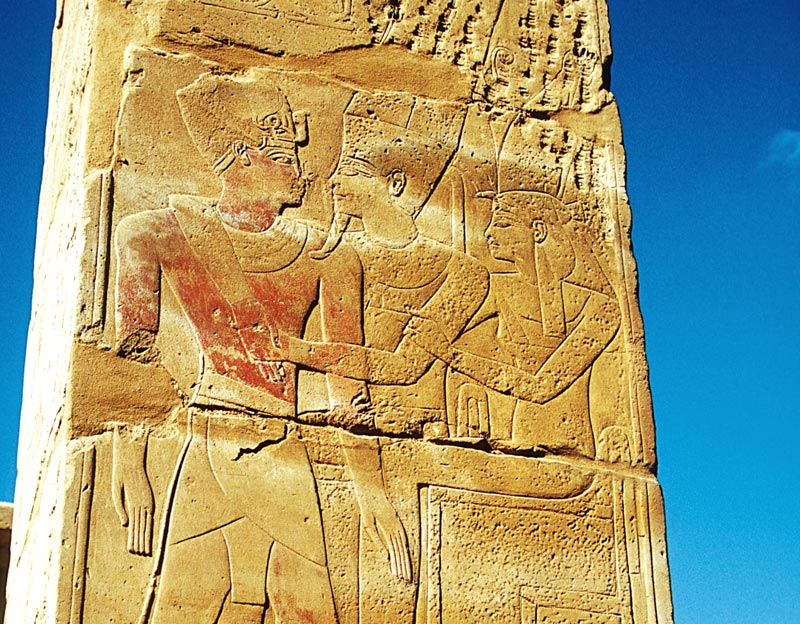
His construction activities include work on the temples of Luxor, Karnak, and other sites including Dendera, Medamud, Armant, Tod, Elkab, and Elephantine, in addition to those mentioned above.
The latest known date in his reign is year 26, noted on a jar discovered by Petrie during the excavations of Amenhotep II’s Temple of Millions of Years in 1896.
He left the throne to his son Thutmose IV, the child of his Great Royal Wife Tiaa.